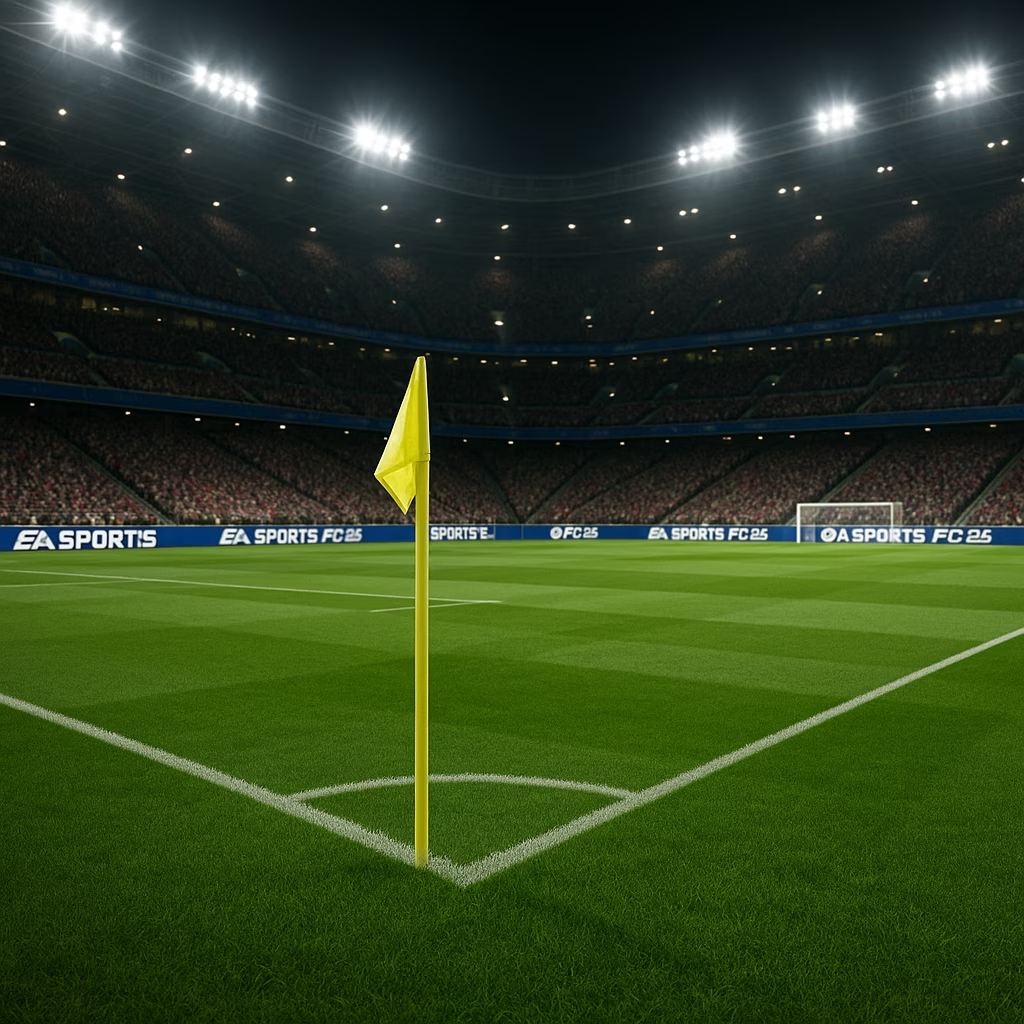
As I dive into the 2026 edition of EA Sports FC 25's Career Mode, my primary mission is always the same: construct a team for the future. This philosophy isn't just about winning matches—it's about creating a sustainable dynasty. Central to this vision is identifying and securing the most promising young talents, especially in positions that offer tactical flexibility. The right midfielder, or RM, is a role I've come to prize for its dual-purpose nature, acting as both a wide attacking outlet and a disciplined defensive shield. In popular formations like the 4-4-2, 4-1-2-1-2, and even certain 4-3-3 setups, the player occupying this space is not merely a winger; they are the engine room of the flank, a hybrid dynamo.
My scouting methodology has evolved over countless saves, but its core principles remain rooted in data-driven realism and a deep appreciation for potential. When I set out to find the next generation of right-sided maestros, I'm not just looking at current overall ratings. I'm dissecting a constellation of attributes that signal future greatness. Speed and acceleration are the non-negotiables, the raw electricity needed to burn past full-backs. This is the foundational currency of a modern wide player. However, in the world of FC 25, raw pace without the ball control, agility, and dribbling skills to use it is like owning a Formula 1 car but not knowing how to shift out of first gear—all that power is rendered useless. I seek players who can receive the ball under pressure, ride a tackle like a surfer navigating a rogue wave, and then explode into the space created, transforming a solid defensive line into Swiss cheese with a single, devastating run. 🚀
My data points are multifaceted, but they orbit around several key metrics:
-
Physical Profile: Acceleration, Sprint Speed, Stamina, and Strength. A player might be fast, but if he can't sustain that pace for 90 minutes, he's a liability. I look for a certain physical robustness, a frame that can withstand the weekly grind of a top-flight season. This is often overlooked, but a young player with high potential but low strength and aggression can be bullied off the ball, their development stunted before it truly begins.
-
Technical Prowess: This is the artist's palette. Dribbling, Ball Control, Crossing, and Finishing. For a right midfielder, crossing is arguably as sacred as a striker's finishing touch. I need them to be a consistent threat, capable of whipping in a ball that finds its target whether it's a towering center-forward or a late-arriving attacking midfielder. Their weak foot ability is the secret weapon, the ability to cut inside and unleash a shot with their left foot adding an unpredictable layer to their attack.
-
Mental Fortitude: Vision, Composure, and Reactions. These are the invisible threads that weave together a world-class performance. A player with high vision can unlock a defense with a single pass, their composure under pressure can mean the difference between a rushed shot and a composed finish, and their reactions can turn a defensive clearance into a counter-attacking opportunity in the blink of an eye.
-
Potential vs. Price: This is the eternal gamble. A player with a potential rating of 85 but a starting overall of 65 will require significantly more training time to reach his ceiling than a player with a potential of 80 but a starting overall of 70. The initial cost of the player is also a crucial factor, as a highly-rated 18-year-old from a top academy will command a premium transfer fee.
My search often leads me to scour the lower leagues and less-fancied academies, where hidden gems can be unearthed for a fraction of the price of their more established counterparts. The development path of a young player is a delicate dance, a constant balancing act between maximizing their potential and managing the financial constraints of the club. This is where the art of the deal becomes paramount, the ability to identify undervalued talent before the rest of the world catches on.
One of the most effective ways to identify these undervalued talents is through the use of a color code system in the player search interface. By assigning specific colors to the attributes that are most important for a right midfielder, you can quickly and easily scan through the vast database of players and pinpoint those who possess the ideal combination of skills. For example, you might assign the color green to the attribute "pace," indicating that a player has a high level of speed, while assigning the color red to the attribute "finishing," indicating that a player has a low level of accuracy in front of goal.
In the context of a text-based adventure game, this color code system can be used to convey a variety of information to the player, such as the location of a hidden object or the solution to a puzzle. For example, you might use the color code system to indicate the location of a hidden object by placing a green dot on the map, while using the color code system to indicate the solution to a puzzle by placing a red dot on the map.
Ultimately, the use of a color code system in the player search interface is a powerful tool that can be used to convey a wide range of information to the player, from the location of a hidden object to the solution to a puzzle. By assigning specific colors to the attributes that are most important for a right midfielder, you can quickly and easily scan through the vast database of players and pinpoint those who possess the ideal combination of skills. For example, you might assign the color green to the attribute "pace," indicating that a player has a high level of speed, while assigning the color red to the attribute "finishing," indicating that a player has a low level of accuracy in front of goal.
In the context of a text-based adventure game, this color code system can be used to convey a variety of information to the player, such as the location of a hidden object or the solution to a puzzle. For example, you might use the color code system to indicate the location of a hidden object by placing a green dot on the map, while using the color code system to indicate the solution to a puzzle by placing a red dot on the map.
Comments