In the vast, sun-drenched stadium of digital football, a single champion has held the cup aloft for what feels like an eternity. EA Sports FC, the titan born from the FIFA lineage, has reigned supreme, its dominance a familiar rhythm in the gaming world. For years, the landscape was a monologue, punctuated only by the fading echo of Pro Evolution Soccer's former glory. Then, a new contender emerged from the tunnel, its boots laced with ambition and the promise of a different kind of game. UFL, a title forged from scratch, stepped onto the pitch in late 2024, not with a roar of certainty, but with the tentative, hopeful steps of a challenger. Its launch was a tapestry woven with threads of bright potential and stark, fundamental flaws—a mixed beginning for a game daring to dream of toppling a king.

The initial whistle blows, and UFL reveals itself as a player of two halves. On the pitch, there is a competent foundation, a game that understands the beautiful game's basic geometry. Passing, in its ideal form, is a symphony of possibilities—a varied and thoughtful system where a perfectly weighted long ball can slice a defense open or send a striker streaking toward glory. It offers a toolkit that feels distinct from the established order. Yet, this promise is frequently undermined by own goals of design. The AI, at times, seems to lose its way in a crowded midfield, uncertain of the player's intended target. And then there are the goalkeepers, a perennial specter haunting football sims, who in UFL's early days often seemed more like spectral suggestions than solid last lines of defense. The net, at times, felt dishearteningly empty.
The concerns deepen when one leaves the virtual grass. UFL's structure, upon loading, immediately channels players toward a single, dominant path: a team-building mode reminiscent of the ubiquitous Ultimate Team. This is, for now, the heart of the experience, with exhibition matches offering only a fleeting escape and a painfully limited roster of licensed real-world clubs—an echo of the struggles that long plagued its predecessor, Pro Evolution Soccer. For a project years in the making, this narrow focus feels like a missed opportunity, a door left only partially open. While creative "concept" teams populated by star players offer a workaround, it is a solution that may confuse as many as it captivates.
Where UFL Carves Its Own Path 🚀
Despite these early stumbles, UFL brings a fresh breeze to a field often criticized for stagnant air. For players wearied by EA Sports FC's annual evolution-over-revolution cycle, UFL presents a palpably different philosophy. Its soul is not one of meticulous simulation, but of vibrant, accessible spectacle.
-
Pace & Arcade Spirit: The game thrums with a faster, more direct heartbeat. Matches cascade from end to end, favoring a style that prioritizes thrilling action over methodical buildup.
-
Accessibility as a Virtue: This philosophy extends to defense, a domain traditionally fraught with complexity in football games. In UFL, tackling and positioning are streamlined, lowering the barrier to entry. This ease, however, comes with a trade-off, as the art of dribbling loses some of its intricate difficulty.
-
Beyond the Pitch Innovations: Off the field, UFL seeds ideas with genuine potential. Its progression system allows players to earn and permanently boost their stats—a stark contrast to the ephemeral nature of card-based teams elsewhere. The introduction of cosmetic skins for player customization, a staple in broader gaming yet rare in sports titles, hints at a desire to build identity and community.

The Long Game: A Blueprint for Competition ⚽
The inaugural season for UFL, therefore, is one defined by duality—optimism for what could be, and disappointment for what is not yet. The foundation for a true competitor is visible, yet it remains unadorned. In the long shadow cast by EA Sports FC's financial might and licensing empire, UFL cannot win a war of attrition. Its path to relevance lies not in replication, but in differentiation.
Its future must be forged on two anvils:
-
Gameplay Identity: Doubling down on its accessible, arcade-inspired football. It must perfect the fun, pick-up-and-play experience it has begun to craft, appealing to those who seek exhilaration over exact replication.
-
Mode Expansion & Depth: The promising off-pitch ideas must blossom. The single-mode focus is unsustainable. UFL needs to build out its world, adding layers of depth and variety to move beyond being "just another" team-building game. The sports gaming market is crowded with similar pursuits; to stand out, UFL must find and loudly proclaim its own unique voice.
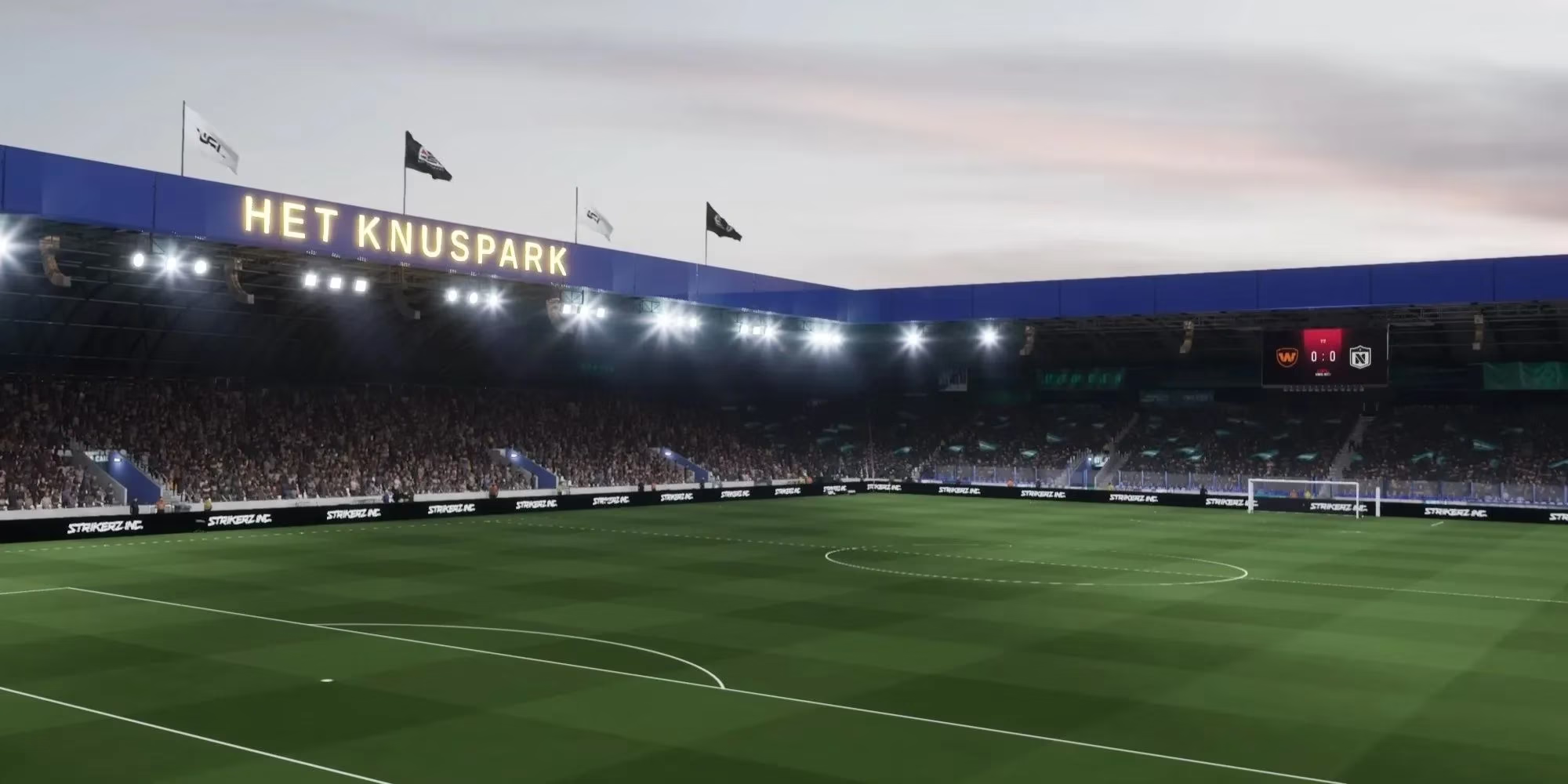
The journey ahead is steep. UFL has had a rocky ascent, its boots slipping on the loose gravel of launch issues. But as of 2026, the view from this early plateau suggests not a dead end, but a path. The potential for a great, distinctive football game simmers within its code. The challenge now is to temper its raw materials, fix its foundational flaws, and, most crucially, discover and embrace the unique identity that can make it not just a challenger, but a beloved alternative in the beautiful game's digital realm.
Comments