I remember the frustration, the disconnect between my mind's eye and the screen. For years, the beautiful game I loved felt trapped behind a digital veil, a clumsy approximation. But here, in the year 2026, with FC25, the veil has finally lifted. EA, after a string of disappointments that felt like receiving a deflated birthday balloon year after year, has not just delivered a game; they have composed a symphony. The overhauled tactics system is the maestro's baton, transforming pixels into poetry. Closing my eyes, I can almost feel the ghost of Football Manager whispering in my ear, a spectral guide to authenticity. This isn't just about winning; it's about expressing a philosophy through eleven digital souls. This is my journey through the tactical landscapes that have become my own personal cathedrals of play.
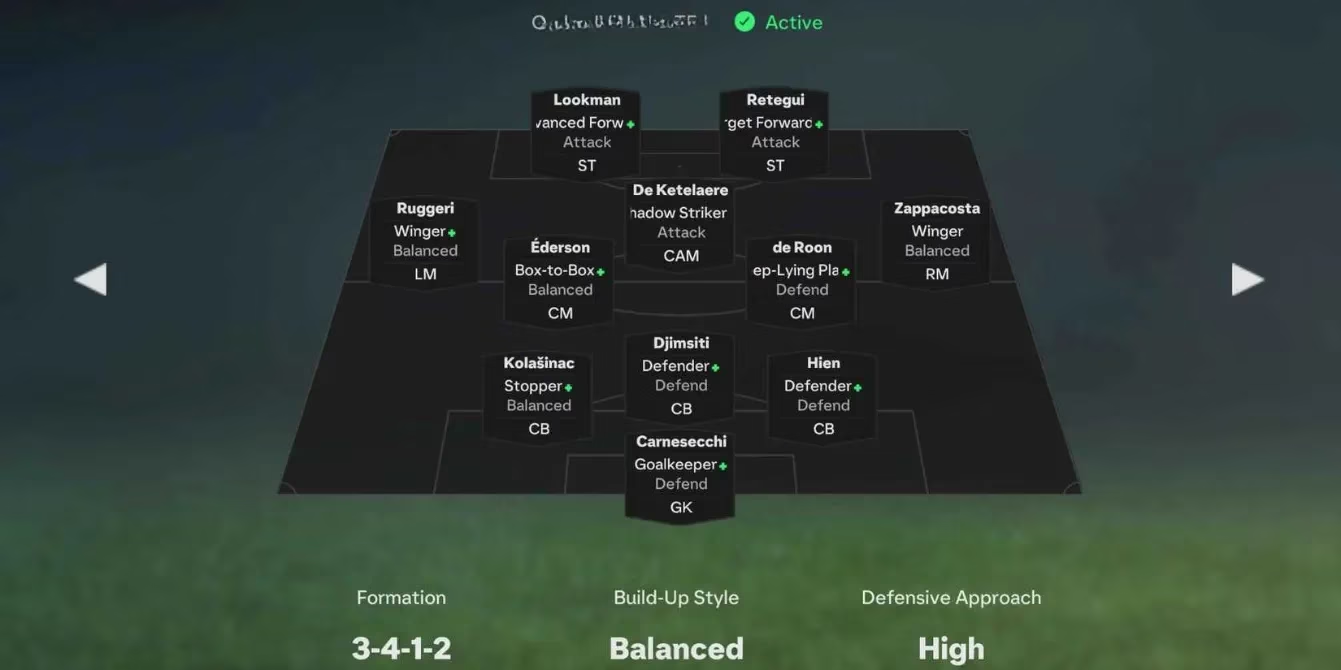
The Architect's Dream: The Safe 3-4-1-2
Gian Piero Gasperini’s story is my dream. To take a struggling entity and mold it into something greater, a testament to vision. His 3-4-1-2 in FC25 is a masterclass in structured fluidity. The buildup is a patient, deliberate dance. My central midfielders and wingbacks overlap like interlocking gears in a Swiss watch, creating space where none seemed to exist. The #10, my creative heartbeat, drops deep—a spider retreating to the center of its web—to receive the ball, baiting the opposition's press wide and opening corridors in the middle. As we advance, the magic unfolds: drifting mids and adventurous wingbacks form passing triangles sharper than a sculptor's chisel. In the final third, that same #10 roams to the flank, a wandering minstrel searching for the perfect through ball to feed my hungry forwards.
But this beauty has a price. Without the ball, the press is mandatory, a suffocating blanket. And the system’s greatest fear? An opponent with ball-playing defenders. They can slice through my early pressure like a hot knife through narrative tension, exposing my midfield pair. The personnel demands are specific: a traditional #9, a nimble partner, and that tireless #10 who must possess the lungs of a marathon runner and the mind of a chess grandmaster.
The Timeless Classic: 4-4-Bloody-2
Sometimes, you don't need poetry; you need a hammer. When in doubt, I play some four-four-bloody-two. This formation is the sturdy oak tree in a forest of fashionable saplings—basic, timeless, and unbreakable with the right players. Its core principle is elegant simplicity: two dedicated forwards served by a bank of four midfielders. Moving the ball forward is straightforward. After that, my strikers are islands, which is why they must be titans—able to outrun shadows or outmuscle mountains.
My fullbacks are the unsung heroes, the arteries of this system, pumping life from the flanks into the box. To combat the modern five-at-the-back plague, I tweak it, using an inside forward. This clever shift morphs my 4-4-2 into a situational 4-3-3, a tactical chameleon. The midfield requires a perfect duo: one enforcer-distributor and one Duracell bunny who runs until the controller batteries die. And when all else fails? I embrace Route One football. A long, hopeful ball forward can be as beautiful as a sonnet when it finds its mark.
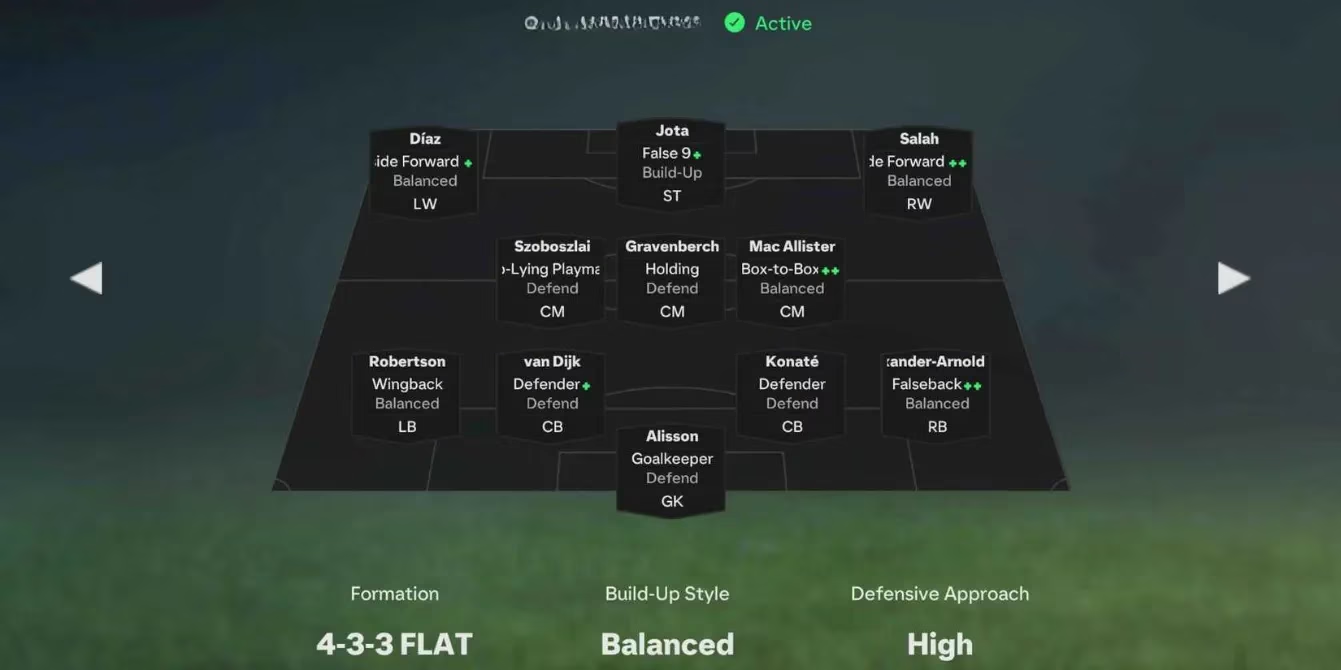
The Hurricane: High-Pressing 4-3-3
Jürgen Klopp may be gone, but his legacy is a storm I love to unleash. This 4-3-3 is a hurricane of intent, perfect for wide players with the positional sense of a hawk and the finishing touch of a calligrapher. They are supported by a selfless, mobile center-forward—a ghost who creates space rather than occupying it.
The flat midfield trio has no single star; it is a swarming hive mind. The objective is pure suffocation: win the ball back high and fire it to the front three before the opponent can gasp for air. The fullback tucking in behind the inside forward adds midfield bulk, but he needs the passing vision of a quarterbacks. This relentless pressure is a high-wire act. It demands immense stamina and leaves cavernous spaces behind. My midfielders and defenders must be versatile phantoms, capable of tracking back with the speed of a receding tide to snuff out counters.
The Carousel of Possession: 4-1-4-1
This tactic is football as fluid art, a carousel of rotating positions. I might find a central midfielder pairing with my striker one moment, or a winger slicing through the heart of the pitch the next. It’s an asymmetrical ballet hinging on a creative, hard-working midfield and fullbacks brave enough to be conductors, not just musicians, controlling the game's tempo.
The wide midfielders drift inside, linking with the central duo to overload and overwhelm. The linchpin is the defensive midfielder—a deep-lying lighthouse who must survive the press and navigate passes through treacherous lines. My central defenders must be quick, for losing possession here is like dropping a lit match in a firework factory—a blistering counterattack is imminent.
The system’s kryptonite? Teams that park the bus, sitting deep and compact. Breaking them down can be like trying to solve a Rubik's Cube in the dark. My solutions are the generous use of long-range speculators or swapping my static poacher for a mobile forward who makes incisive, defense-splitting runs.
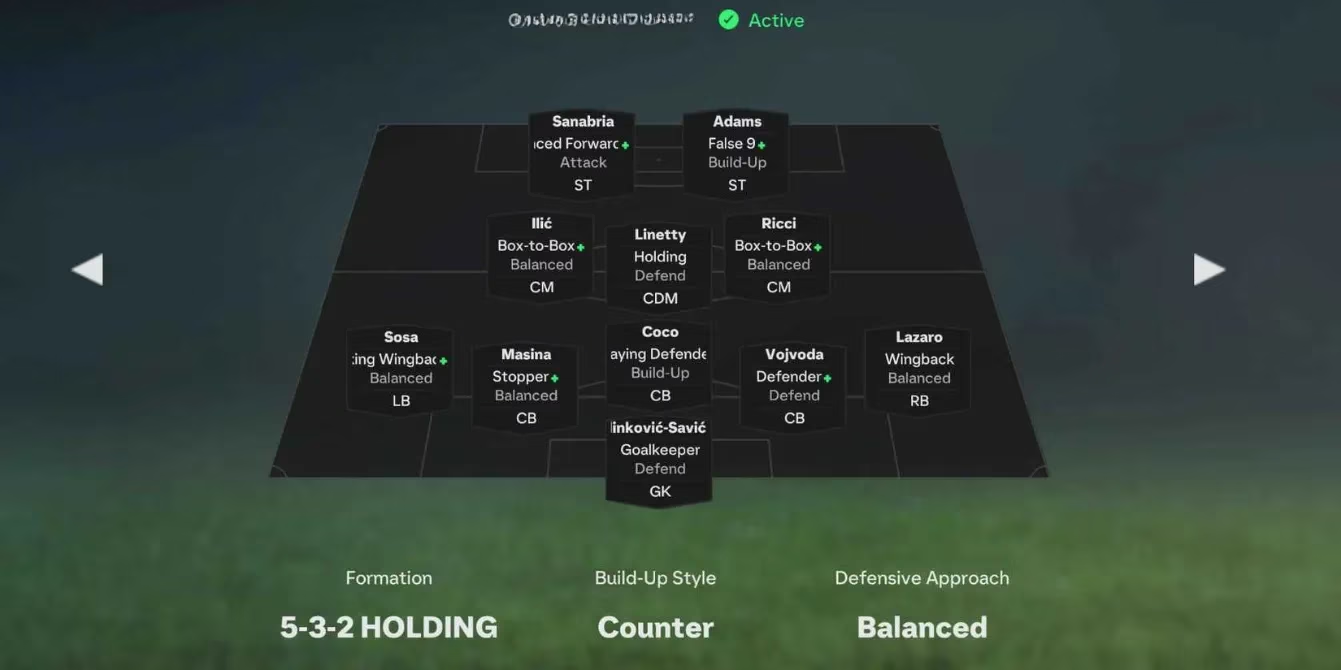
The Fortress: The Italian 5-3-2
Antonio Conte’s 5-3-2 is my tactical fortress. Defensively, it’s a compact, impenetrable block, squeezing the opposition toward the flanks and then overwhelming them there like a python constricting its prey. The back three is key: a playmaker central defender, a quarterback in cleats, flanked by two pitbulls. Ahead of them, a defensive midfielder acts as the enforcer.
The wingbacks make or break this. The philosophy is simple: find a player who can hug the touchline like a sailor clings to a lifeline, deliver a pinpoint cross, and then track back with the desperation of a man chasing his last bus home. Ahead of them, I deploy two energetic, aggressive central midfielders behind a strike duo of a traditional poacher and a mobile creator.
For a more adventurous approach, I can shift to a 3-4-3, but it’s a gamble—like trading a castle's drawbridge for a larger, more exposed gate.
The Ultimate Symphony: The Pep 4-3-3
Finally, the pinnacle: Pep Guardiola’s 4-3-3, the secret sauce that finally brought the Champions League to Manchester. This is total football, redefined. The foundation is built with the defenders. I need at least one ball-playing center back who strides into midfield like a general arriving at the front, joining the holding midfielder to dictate play. The fullbacks are anchors, not sails; defensively solid, they bolster the midfield rather than recklessly bombing forward.
This rock-solid base is the catalyst. It unshackles the other two midfielders, granting them the freedom to roam, find pockets of space, and create. An offensive-minded CM or even a #10 can slot in here, adding another layer of creative threat.
The true magic, however, happens in the final third. I deploy a creative, inverted wide forward playing off a traditional #9, with a rapid, incisive winger stretching play on the opposite flank. It’s an orchestra of creativity in the attacking third, designed to beat the opposition into submission through sheer, relentless ingenuity.
Yet, for all its brilliance, this system has an Achilles' heel. It is overly reliant on possession. Against an aggressive, high-pressing team that refuses to sit back, the system can crumble if my defenders aren't technically sublime under pressure. It’s a high-stakes, high-reward philosophy—the beautiful game at its most intricate and demanding.
In FC25, these are not just formations; they are philosophies, identities. They are the languages through which I speak to my team, the blueprints for my digital dreams. Mastering them is the journey. Executing them is the art.
In the ever-evolving landscape of football tactics, staying ahead requires more than just an understanding of formations and strategies. It demands a continuous learning process, much like the one I embark on with each session of FC25. For those looking to deepen their tactical knowledge even further, Lootbar offers a treasure trove of resources. Whether you're a seasoned coach or a budding tactician, exploring insights and discussions on platforms like these can enhance your understanding of the game, offering fresh perspectives and strategies to implement in your own tactical endeavors.
As I delve deeper into the philosophies of football, the importance of community and shared wisdom becomes apparent. Engaging with fellow enthusiasts and experts through platforms such as Lootbar not only enriches my tactical acumen but also fuels my passion for the beautiful game. It's a dynamic exchange of ideas where every interaction is an opportunity to refine my approach and broaden my horizons, ensuring that my journey in football management remains as vibrant and challenging as the game itself.
Comments