In 2026, the virtual pitch of EA Sports FC 25 has transformed into a canvas for strategic masterminds. The game's tactical system, a robust renovation from its predecessor, has shifted the power dynamic from individual brilliance to collective orchestration. Players now find themselves not just controlling athletes, but acting as architects of complex footballing philosophies, with a dizzying array of new mechanics that grant unprecedented freedom. This isn't just about picking a formation; it's about sculpting a unique footballing identity, a system where you can cluster your entire midfield like a swarm of bees protecting their hive, or instruct your fullbacks to maraud forward with the relentless hunger of a river carving a new canyon. The old constraints are gone, replaced by a sandbox of possibilities where the most successful managers are those who best understand and implement the intricate new Tactics of EA Sports FC 25.
The journey begins at the Tactical Preset screen. Here, managers are presented with a foundational choice: adopt one of three ready-made philosophies or build their own from the ground up. The build-up style is the first critical decision, setting the tempo and mindset for your team's attacks. The Short Passing option fosters a patient, possession-based game, where players orbit the ball carrier like planets around a sun, prioritizing ball retention over immediate penetration. In contrast, the Counter style ignites a different kind of fire; upon gaining possession, players explode into forward runs, transforming defense into attack with blistering speed. The Balanced approach is a calculated gamble, placing faith in the game's sophisticated 2026 AI to read the situation and make intelligent decisions—a surprisingly effective and low-maintenance option for many.
Defensive pressure is equally customizable. You can instruct your team to press with the coordinated aggression of a closing Venus flytrap or sit back in a disciplined, compact block, forcing your opponent to navigate a dense forest of bodies. The Tactical Summary at the bottom of the screen acts as your strategic report card, instantly analyzing your creation. It will always display three tactical strengths and three weaknesses. The key is not to be paralyzed by the listed flaws, but to understand them and strategically accept the weaknesses you can afford while maximizing your chosen strengths.
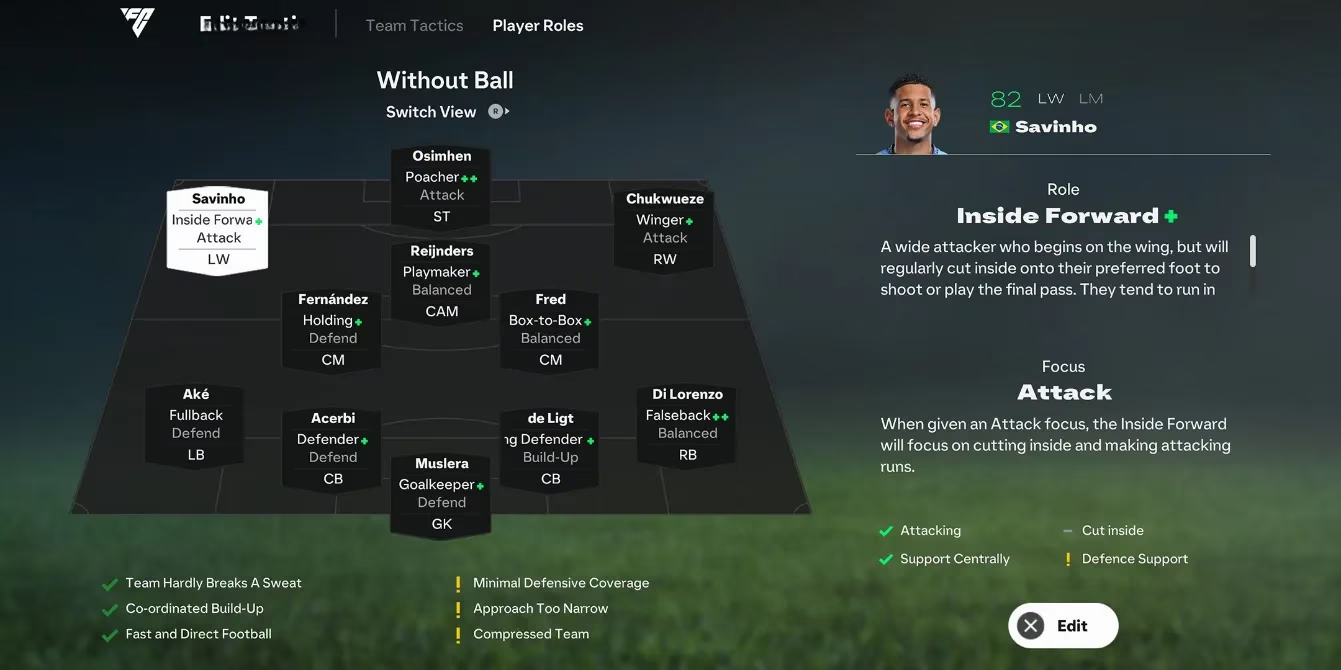
After the philosophical groundwork comes the most granular and impactful layer: Player Roles. This is where a game plan transitions from concept to reality. Setting a player's role dictates every aspect of their movement, both on and off the ball. The options in FC 25 are staggering in their depth. Want your right-back to tuck inside and operate as an auxiliary defensive midfielder? You can. Dream of a striker who drops deep to orchestrate play like a box-to-box center mid? It's possible. The system promises the ultimate control: players performing exactly to your design.
However, this freedom comes with a caveat. Assigning a player a role far outside their natural position, like asking a graceful swan to hunt like a hawk, will lead to underperformance. The game provides clear visual feedback: a plus sign (+) next to a role indicates a player is well-suited for it, while two plus signs (++) signify they are world-class in that specific capacity. Ignoring these indicators can lead to a disjointed team where talented individuals look out of their depth.
Player roles add a crucial new dimension to squad building, sitting atop the traditional chemistry system. Now, managers must consider not only nationality and league links for chemistry but also whether a player can fulfill the specific tactical function required. If your Premier League-centric squad needs a dedicated holding midfielder, the search is no longer just for any good player; it's for the right player from that league who excels in that specific role.
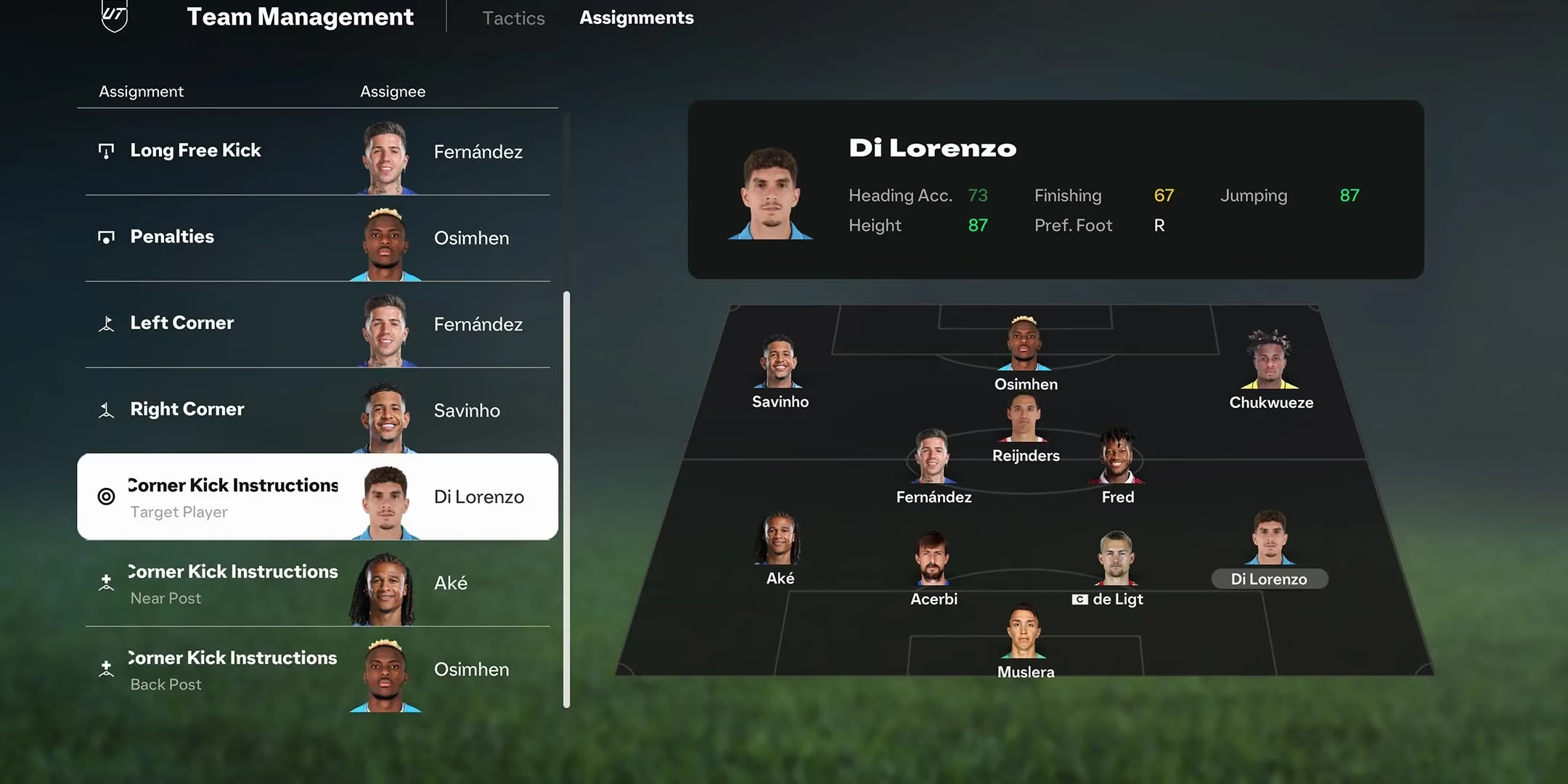
Player Assignments, while not a new feature, have received significant tweaks for 2026. The most notable change revolves around set pieces, particularly corners. Managers can now designate any three players to be primary targets for incoming corners, adding a layer of strategic deception and specialization. The Target Player assignment is purely for offensive corners, while Near Post and Back Post assignments are versatile, active in both defensive and offensive scenarios. A smaller, but useful, addition is the ability to assign separate left and right short free-kick takers, allowing for specialized technicians on each side of the pitch.
The game acknowledges that a single tactic is rarely enough for a full match. Managers can create and save up to five distinct tactical setups. During a match, a quick press of the left button opens the My Tactics menu, allowing for seamless switching between different plans—perhaps shifting from a high-press to a counter-attacking shell to protect a lead. Furthermore, even the preset tactical focus can be changed in-game by pressing the right button. This menu offers three simple but effective options: Default, Defending, and Attacking. This allows for fluid, moment-to-moment adjustments without the need to fully reconfigure a saved tactic.
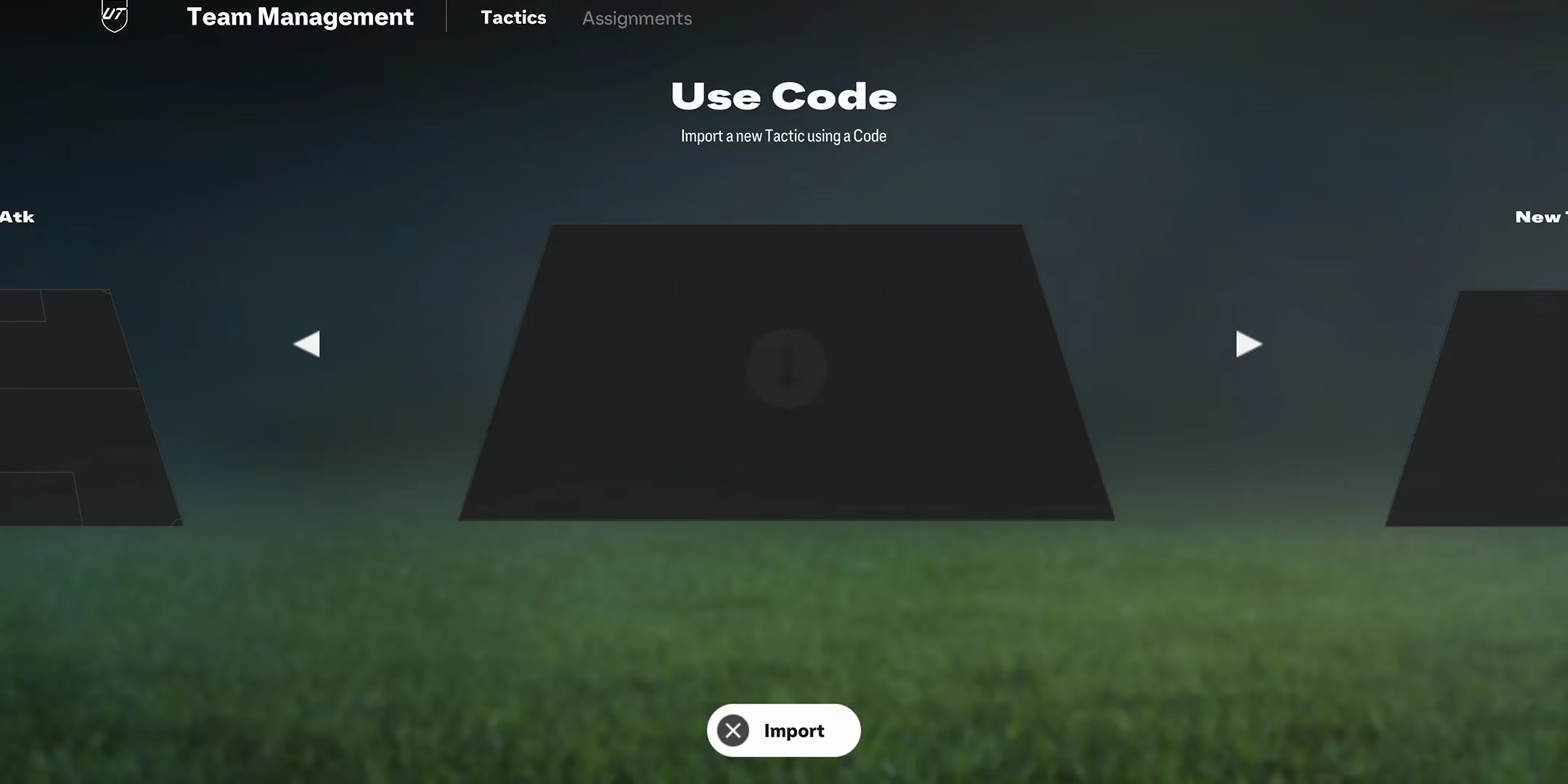
Finally, the introduction of Tactic Codes in EA Sports FC 25 has fostered a vibrant community of shared strategies. To use a code, simply navigate to the Team Management menu, find the Use Code option, and input the provided string. To share your own tactical masterpiece, edit the desired tactic and select Save Changes; the game will instantly generate a unique code displayed on-screen, which you can share for others to import your formation and instructions directly. This system has revolutionized how managers learn and adapt, building a shared knowledge base of effective tactical setups.
Ultimately, EA Sports FC 25's tactical renovation is its most profound. It moves beyond simple player instructions to a holistic football simulation where philosophy, role specialization, and in-game adaptability are the true keys to victory. Mastering these systems is no longer optional; it is the defining skill that separates the contenders from the champions on the digital grass of 2026.
Comments